Making Your Outdoor Heaters Actually Smart
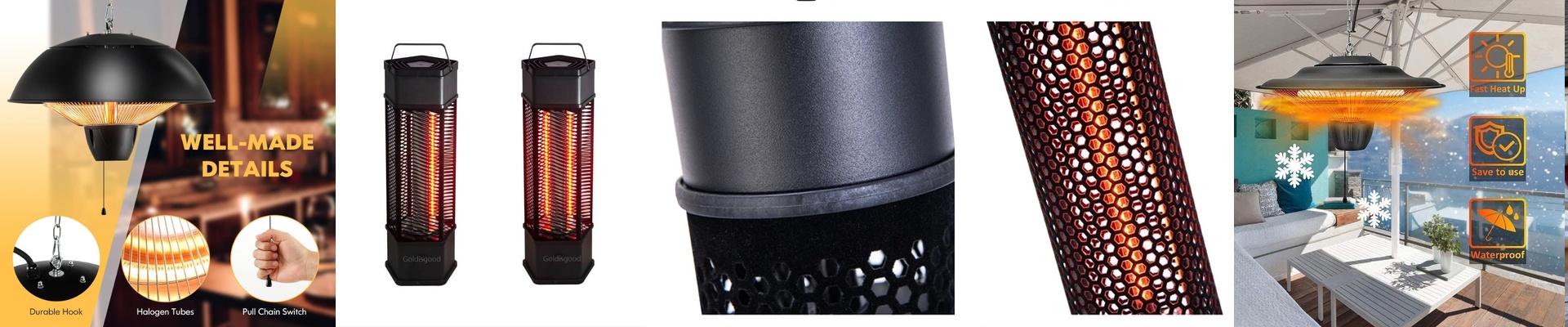
Let’s be honest: outdoor heating is a bit of a battle. You need something that puts out serious heat, but it also has to survive the elements. That’s why we build our garden heaters to IP65 standards. In plain English? They’re sealed tight. Rain, snow, or a stray splash from a garden hose won’t fry the electronics. You can just leave them up and forget about the weather.
Heat That Hits You Instantly
Most heaters try to warm up the air around you, which is a losing game when there’s a breeze. We do things differently. Our heaters use short-wave infrared, which sends energy directly to your skin and clothes. It’s fast. Really fast. The second you flip the switch, the filament hits temperature in milliseconds. There’s no awkward waiting around for the unit to “warm up.” It’s like stepping from a chilly winter afternoon straight into a spring day, instantly.
Getting Them to “Talk” to Your Home
Now, if you want to control these with your phone or a smart hub, there’s a trick to it. You can’t just plug a high-power heater directly into a tiny smart plug—you’ll melt it. Instead, we use a heavy-duty relay or a TRIAC dimmer. Think of the smart controller (whether you use Zigbee, Matter, or Wi-Fi) as the “brain” and the relay as the “muscle.” The brain sends a tiny signal, and the muscle flips the heavy power switch. Plus, you can hook this up to a temperature sensor. Set it to 10°C, and the heaters just kick in on their own the moment the air gets crisp.
A Couple of Things to Keep in Mind
Here’s the thing about high-wattage gear: it’s hungry for power. If you’re hanging four 2000W units on a single circuit, you’re probably going to trip your breaker. It’s a headache you don’t want. We usually suggest running dedicated circuits for bigger setups. It keeps the power steady and ensures your heat doesn’t dip just when you need it most. Also, because those IP65 seals are so tight, the heat stays trapped inside the unit. To stop the chassis from warping or bending under the pressure, we use heat-resistant alloys. It’s a bit more work on our end, but it means the heater actually lasts.